
allnewscastallnewscast
Breaking News
AI & Tech

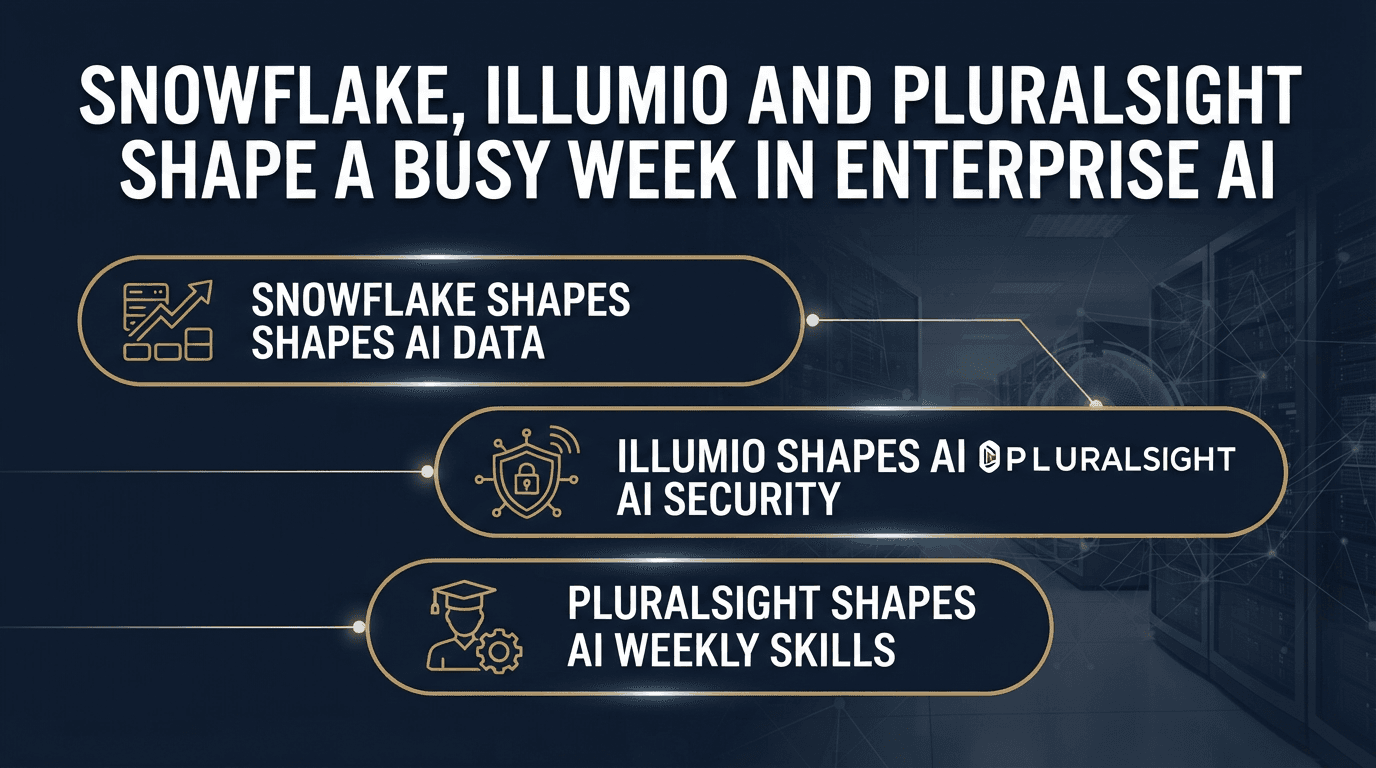
Snowflake, Illumio and Pluralsight Shape a Busy Week in Enterprise AI
Nic Reeve4 min read
Snowflake, Illumio and Pluralsight Shape a Busy Week in Enterprise AI

Snowflake’s newest AI features, an Illumio recognition, and a Pluralsight product update helped shape the week’s enterprise AI news cycle. Across the week of Aug. 21, vendors continued to push AI deeper into data platforms, security workflows, and technical training, with Snowflake’s release notes showing the clearest burst of product activity. Illumio also made headlines after being named a leader and customer favorite in microsegmentation, while Pluralsight drew attention through its inclusion in industry roundups covering AI training and skills tools.

Snowflake’s release cadence stood out most. On Aug. 20 and Aug. 21, the company added a series of AI and data features, including AI_EXTRACT and AI_PARSE_DOCUMENT support for client-side encrypted stages and network-restricted accounts, the Cortex Agent code execution tool in preview, and later Cortex AI_MULTI_EMBED for semantic video search. Snowflake also said sensitive data classification now supports AI mode in public preview and that CoCo automations in CLI and Snowsight are available in public preview.

The practical message from Snowflake’s update is straightforward: the company is broadening the set of tasks enterprises can automate inside its platform, from document extraction to agent execution and video search. That matters because many enterprise buyers are no longer asking whether AI can generate text; they are asking whether it can operate safely across governed data, restricted environments, and production workflows. Snowflake’s release notes suggest the company is positioning Cortex as a broader execution layer, not just a model wrapper.

Security remained a parallel theme in the week’s AI coverage. One widely discussed story circulating in the AI and security press described an AI-generated code change in a public Snowflake repository that allegedly introduced a script injection risk, followed by another AI agent detecting and exploiting the issue. While that account is notable for illustrating how AI tools can both create and catch vulnerabilities, it should be treated carefully as a brief report rather than a formal incident analysis. Even so, it underscored a broader concern: as enterprises adopt AI-assisted coding and automated review, they also need stronger guardrails around what those systems can change.

Illumio’s headline was more traditional, but still relevant to the AI-driven security conversation. The breach containment company announced on Aug. 18 that it had been named a Leader and Customer Favorite in The Forrester Wave: Microsegmentation Solutions, Q3 2026. Illumio has been emphasizing visibility and control in environments where workloads, including AI workloads, can move quickly across networks and cloud systems. In that context, the recognition is more than an accolade; it reinforces the company’s pitch that segmentation and containment are essential when organizations deploy more autonomous systems.

Pluralsight’s role in the week’s roundup was less about a single blockbuster announcement and more about its continuing place in the AI-skills market. Solutions Review’s weekly AI briefing grouped Pluralsight with other vendors making updates for teams that need to build, secure, and operationalize AI systems. That positioning reflects a broader market reality: as enterprise AI products mature, demand is rising for platforms that can train developers, cloud engineers, and security teams to use them effectively. Pluralsight’s business remains tied to that need for structured learning in fast-changing technical domains.

The week’s broader AI news also pointed to a fast-moving competitive environment. Reuters reported that OpenAI cut developer pricing for a frontier GPT-5.6 model by more than 20% on Aug. 21, a reminder that model access and inference economics remain central to vendor strategy. Reuters also noted other AI-related moves, including Nvidia’s investment in data center infrastructure and ongoing corporate pressure to balance AI spending with returns. Those developments help explain why enterprise vendors like Snowflake are racing to integrate model routing, governance, and automation directly into their platforms.

That broader market pressure is visible in Snowflake’s own product direction. Recent coverage highlighted the company’s dynamic model routing in Cortex AI Gateway, which lets enterprises choose among multiple models based on task needs, governance demands, and cost. For organizations adopting AI at scale, that kind of routing matters because it reduces dependence on a single model provider while giving IT teams more control over where data goes and how it is processed.

For security teams, the same week’s developments carried a familiar warning: automation changes the attack surface as quickly as it changes productivity. AI-assisted coding, model routing, document extraction, and agent execution can all reduce manual work, but they also create new opportunities for misconfiguration and abuse. Vendors such as Illumio are responding by emphasizing containment and microsegmentation, while vendors like Snowflake are focusing on governance features that keep more AI work inside controlled environments.

For enterprise buyers, the result is a clearer split in the market. Some vendors are competing on model performance and pricing, others on training and enablement, and others on containment and governance. The week of Aug. 21 showed that the strongest AI stories are no longer just about what models can do; they are about where those models run, how they are supervised, and who can safely trust them in production.
Read more

Related Articles

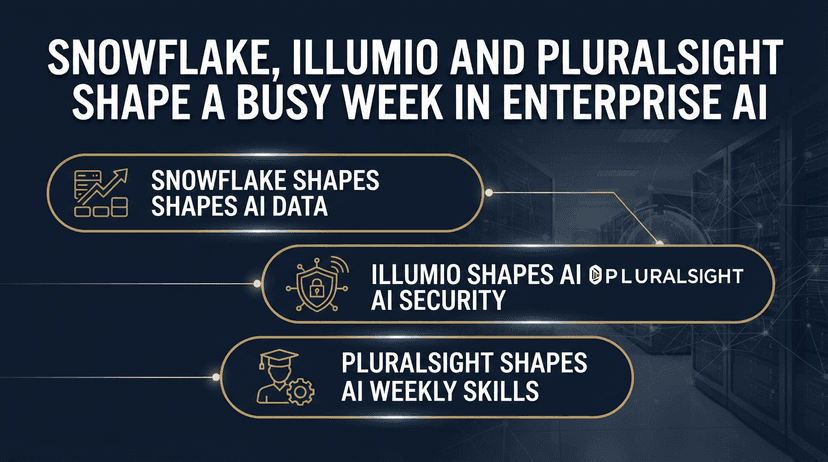
Snowflake, Illumio and Pluralsight Shape a Busy Week in Enterprise AI
AI & Tech

Snowflake, Illumio and Pluralsight Shape a Busy Week in Enterprise AI

Snowflake’s newest AI features, an Illumio recognition, and a Pluralsight product update helped shape the week’s enterprise AI news cycle. Across the week of Aug. 21, vendors continued to push AI deeper into data platforms, security workflows, and technical training, with Snowflake’s release notes showing the clearest burst of product activity. Illumio also made headlines after being named a leader and customer favorite in microsegmentation, while Pluralsight drew attention through its inclusion in industry roundups covering AI training and skills tools. Snowflake’s release cadence stood out most. On Aug. 20 and Aug. 21, the company added a series of AI and data features, including AI_EXTRACT and AI_PARSE_DOCUMENT support for client-side encrypted stages and network-restricted accounts, the Cortex Agent code execution tool in preview, and later Cortex AI_MULTI_EMBED for semantic video search. Snowflake also said sensitive data classification now supports AI mode in public preview and that CoCo automations in CLI and Snowsight are available in public preview. The practical message from Snowflake’s update is straightforward: the company is broadening the set of tasks enterprises can automate inside its platform, from document extraction to agent execution and video search. That matters because many enterprise buyers are no longer asking whether AI can generate text; they are asking whether it can operate safely across governed data, restricted environments, and production workflows. Snowflake’s release notes suggest the company is positioning Cortex as a broader execution layer, not just a model wrapper. Security remained a parallel theme in the week’s AI coverage. One widely discussed story circulating in the AI and security press described an AI-generated code change in a public Snowflake repository that allegedly introduced a script injection risk, followed by another AI agent detecting and exploiting the issue. While that account is notable for illustrating how AI tools can both create and catch vulnerabilities, it should be treated carefully as a brief report rather than a formal incident analysis. Even so, it underscored a broader concern: as enterprises adopt AI-assisted coding and automated review, they also need stronger guardrails around what those systems can change. Illumio’s headline was more traditional, but still relevant to the AI-driven security conversation. The breach containment company announced on Aug. 18 that it had been named a Leader and Customer Favorite in The Forrester Wave: Microsegmentation Solutions, Q3 2026 . Illumio has been emphasizing visibility and control in environments where workloads, including AI workloads, can move quickly across networks and cloud systems. In that context, the recognition is more than an accolade; it reinforces the company’s pitch that segmentation and containment are essential when organizations deploy more autonomous systems. Pluralsight’s role in the week’s roundup was less about a single blockbuster announcement and more about its continuing place in the AI-skills market. Solutions Review’s weekly AI briefing grouped Pluralsight with other vendors making updates for teams that need to build, secure, and operationalize AI systems. That positioning reflects a broader market reality: as enterprise AI products mature, demand is rising for platforms that can train developers, cloud engineers, and security teams to use them effectively. Pluralsight’s business remains tied to that need for structured learning in fast-changing technical domains. The week’s broader AI news also pointed to a fast-moving competitive environment. Reuters reported that OpenAI cut developer pricing for a frontier GPT-5.6 model by more than 20% on Aug. 21, a reminder that model access and inference economics remain central to vendor strategy. Reuters also noted other AI-related moves, including Nvidia’s investment in data center infrastructure and ongoing corporate pressure to balance AI spending with returns. Those developments help explain why enterprise vendors like Snowflake are racing to integrate model routing, governance, and automation directly into their platforms. That broader market pressure is visible in Snowflake’s own product direction. Recent coverage highlighted the company’s dynamic model routing in Cortex AI Gateway, which lets enterprises choose among multiple models based on task needs, governance demands, and cost. For organizations adopting AI at scale, that kind of routing matters because it reduces dependence on a single model provider while giving IT teams more control over where data goes and how it is processed. For security teams, the same week’s developments carried a familiar warning: automation changes the attack surface as quickly as it changes productivity. AI-assisted coding, model routing, document extraction, and agent execution can all reduce manual work, but they also create new opportunities for misconfiguration and abuse. Vendors such as Illumio are responding by emphasizing containment and microsegmentation, while vendors like Snowflake are focusing on governance features that keep more AI work inside controlled environments. For enterprise buyers, the result is a clearer split in the market. Some vendors are competing on model performance and pricing, others on training and enablement, and others on containment and governance. The week of Aug. 21 showed that the strongest AI stories are no longer just about what models can do; they are about where those models run, how they are supervised, and who can safely trust them in production.
Nic Reeve·
Avos Bets on AI Agents to Turn News Into Personalized Daily Briefings
AI & Tech

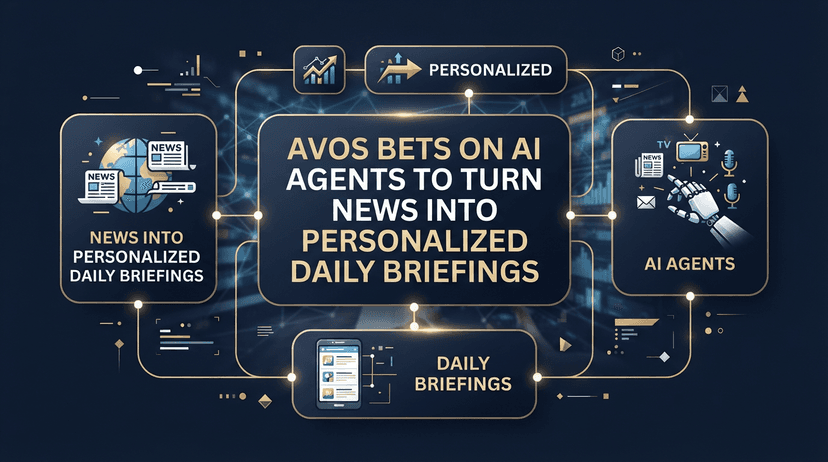
Avos Bets on AI Agents to Turn News Into Personalized Daily Briefings

Avos pushes personalized AI briefings into the news mainstream as the Cyprus-based startup unveils a product built to turn sprawling online coverage into concise, recurring editions tailored to each reader’s interests. The company’s pitch is simple: instead of forcing users to scroll through endless feeds, Avos uses AI agents to do the reading, filtering, deduplication, and synthesis before delivering a finished briefing. In recent coverage, founder and CEO Stef Roussos described the product as an “agentic news and research platform” designed around personalized recurring briefings, with editions shaped by topics, sources, markets, tone, and schedule. That positioning places Avos in a fast-growing corner of the artificial intelligence market, where companies are moving beyond chatbots and toward systems that can independently complete multi-step knowledge tasks. In Avos’s case, the task is not generating one-off summaries, but producing a recurring news product that aims to resemble a private front page for every reader. A briefing product, not another feed According to recent reporting, Avos is organized around a simple workflow: a user describes what they want to follow in plain language, and the platform does the research in the background. It then gathers articles from its source catalog, removes duplicates, and assembles a single briefing delivered before the user starts the day. That approach reflects a broader industry shift. Many AI news tools focus on summarization, but Avos is built around recurring publication. Instead of asking people to return to a feed repeatedly, the company is trying to give them a finite edition that reduces information overload. That distinction is central to the startup’s identity and to the language Roussos has used in public comments. Recent coverage also says Avos can deliver briefings in six languages and include live financial data blocks for stocks, crypto, forex, and commodities. The service has been described as offering a free ad-supported plan as well as paid tiers that remove ads and expand capacity and features. Stef Roussos frames AI as an economics shift Roussos has argued that advances in agentic AI have changed the economics of personalized news. In the company’s launch coverage, he said the platform can do much of the research on a personalized basis and synthesize it into a front page meaningful to the individual reader at a measured generation cost of roughly three cents per briefing. That cost framing matters because it highlights the company’s thesis: if agents can reliably handle research, filtering, and cross-referencing at scale, then highly personalized editorial products may become economically viable for consumers rather than only for institutions. Avos is essentially betting that automation can make premium information curation affordable enough to reach a broad audience. The company has also emphasized that it is not trying to replace journalism. Instead, its product is presented as a layer that helps readers process the volume of available reporting. In that model, human publishers still produce the underlying coverage, while Avos attempts to organize it into a reader-specific package. Atlas, anchors, and the infrastructure behind the product In the interview coverage, Roussos said the company built a backend system called Atlas to handle the difficult work of searching for, ingesting, processing, and deduplicating content from thousands of sources. That kind of infrastructure is essential to any agentic briefing product, because the quality of the output depends heavily on source coverage, ranking, and cleanup before generation begins. The company has also introduced “Anchor Mode,” described as an interactive audio experience that functions like a news podcast but allows listeners to ask questions for deeper exploration. That feature suggests Avos is experimenting with more than text delivery, aiming to turn briefings into a multi-format information product that can be consumed in different ways throughout the day. Private beta began in March 2026, according to launch reporting, before the platform moved to a public release in August 2026. That timeline suggests Avos has spent several months refining its briefing workflow before opening it more widely to users. Why the launch matters now Avos arrives at a moment when AI companies are racing to prove that agents can do something more practical than answer simple prompts. News and research briefings are a natural test case because they require repeated browsing, source comparison, filtering, and concise synthesis — all tasks that are difficult for humans to perform efficiently at scale every day. The startup’s model also reflects growing demand for personalization in professional information products. Traders, founders, analysts, and operators often want a tighter signal-to-noise ratio than a general-purpose feed provides. By combining source preferences, market context, tone, and timing, Avos is targeting users who value specificity over volume. At the same time, the product raises familiar questions about reliability, editorial transparency, and dependence on automated synthesis. Those questions are not unique to Avos, but they are especially relevant when a platform positions itself as a recurring source of news and research rather than a simple search or summarization tool. What comes next For now, Avos is presenting itself as a practical application of agentic AI rather than a speculative one. Its launch messaging focuses on a clear promise: users define the agenda, and the software does the reading. If the company can consistently deliver accurate, timely, and truly useful briefings, it may help define a category that sits between news aggregation, editorial curation, and automated research. The bigger test will be whether personalized briefings can become a daily habit for users outside a narrow early-adopter group. If they can, Avos may become one of the more visible examples of how agentic AI is beginning to reshape information consumption.

Nic Reeve·
AInews Weekly: Education Gaps, Datacenter Surge and Rutgers Trust Study
AI & Tech

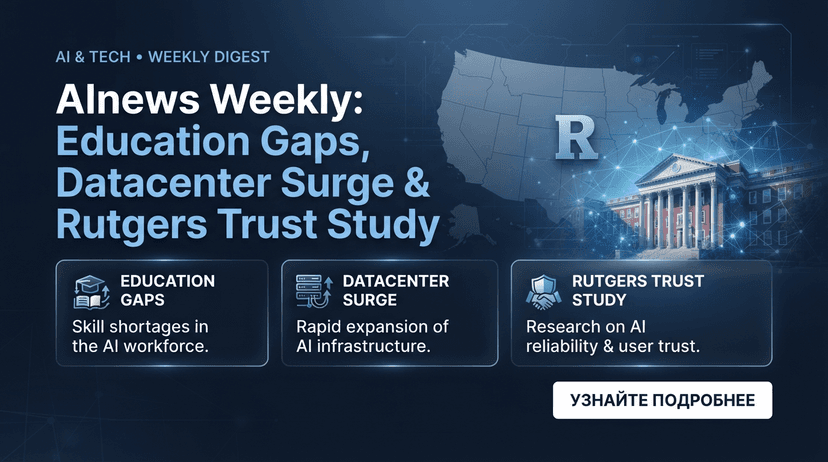
AInews Weekly: Education Gaps, Datacenter Surge and Rutgers Trust Study

AInews Weekly: Education Gaps, Datacenter Spending Spike, and New Public Trust Data During the week of September 11, 2026, AInews stories ranged from a sweeping DataCamp survey on classroom AI use to fresh IDC numbers on infrastructure spending and new Rutgers research on public trust in automated decision systems, showing how fast artificial intelligence is spreading while core skills and guardrails struggle to keep pace. What did DataCamp reveal about AI in classrooms in 2026? DataCamp’s new “AI in Education” report, released on September 10, 2026, found that student use of AI tools is now near universal, while fluency and critical-thinking safeguards lag behind. The study surveyed more than 150 teachers and 150 students, highlighting a sharp divide between everyday AI use and formal guidance. According to DataCamp’s 2026 AI in Education report, published via Business Wire and covered by the Las Vegas Sun, key findings include: Scope: More than 150 teachers and more than 150 students across different schools were surveyed about AI use and attitudes. Adoption: The report describes student AI adoption as effectively universal among respondents, meaning most students rely on AI tools in some form for schoolwork. Skills gap: DataCamp concludes that “massive gaps remain between AI adoption and fluency,” with many students using tools they do not fully understand. Critical thinking worries: Educators in the survey express concern that over‑reliance on AI may weaken students’ independent reasoning and writing skills. Policy uncertainty: Respondents report uneven or unclear school protocols for AI use, from plagiarism rules to allowed tools during assignments. DataCamp positions itself as an AI and data upskilling platform and says the report is meant to give educators a baseline for how the “first AI‑native class,” graduating in 2026, is actually using automation in its daily work. The company argues that structured training in topics such as AI ethics, data literacy, and prompt design is now a prerequisite for meaningful classroom use rather than an optional add‑on. Earlier in 2026, DataCamp pledged free AI training for one million teachers and students worldwide through its DataCamp Classrooms program, including courses in Python, SQL, Power BI and broader AI literacy. The September education report puts numbers and concern behind that pledge, framing it as a response to the specific gaps the survey identified. How is DataCamp expanding AI tools and content for professionals and organizations? DataCamp spent Q3 2026 pushing AI deeper into its corporate and professional learning products, from an expanded AI Tutor interface to AI Adoption Insights dashboards for team admins. The platform also rolled out new tracks tied to OpenAI models, Anthropic’s Claude, and LangChain‑based AI engineering training. In its Q3 2026 roadmap webinar, summarized on DataCamp’s site, the company reported major content and feature milestones across the first half of the year: New content: More than 120 new courses, 21 new learning tracks, and support for 13 languages added in the first half of 2026. AI Tutor expansion: DataCamp renamed its “AI Native” learning mode to **AI Tutor** and began integrating Anthropic’s Claude and Claude Cowork directly into that experience. Infrastructure: A DataCamp MCP server connects Claude to the platform, letting admins manage learning plans and pull reports through natural‑language prompts. Analytics: “AI Adoption Insights” in Group Hub show how teams use AI tools day to day and benchmark that usage against other organizations. Specialized tracks: New tracks focus on Claude fundamentals, Claude for software engineers, and token cost management for developers, along with courses for Microsoft Fabric, Power Platform, Polars, and Apache Airflow. Certifications: A Python Developer Associate certification is live, with AI for Business, AI Agent Fundamentals, and AI Leadership credentials scheduled to round out the AI fluency lineup. Earlier in the year, DataCamp also announced a partnership with LangChain to launch an “AI Engineering with LangChain” track, aimed at software developers who want to build production‑grade AI applications. That track is positioned as part of the broader move from basic prompt skills to full AI engineering, covering topics such as chaining tools, handling context windows, and monitoring model behavior. The new courses build on DataCamp’s coverage of frontier models, including blog analysis of OpenAI’s GPT‑6 “Astra” launch and comparison pieces that try to map when developers should choose newer OpenAI systems over competitors like Anthropic’s Claude Fable 5.1. Together with AI Tutor and LangChain tracks, these updates show DataCamp targeting both the education market and working engineers with more intensive AI workflows. What does IDC report about AI‑driven infrastructure and networking spending? IDC’s latest infrastructure research points to sharp growth in networking hardware as organizations build out AI data centers. The firm highlights a 43.4% year‑over‑year surge in the Ethernet switch market to $18.9 billion in the second quarter of 2026, driven largely by AI training and inference workloads. According to IDC’s August 2026 networking market blog post: Ethernet switch revenue rose 43.4% year over year in Q2 2026 to reach $18.9 billion, which IDC links directly to demand from AI datacenters. Most of this growth comes from high‑end switches deployed in hyperscale and large enterprise facilities running GPU‑dense AI clusters. IDC analysts argue that AI workloads are changing network design, pushing vendors toward higher port densities and new designs optimized for large‑scale parallel processing. The report suggests that spending on AI infrastructure is no longer experimental and is instead driving record‑level datacenter budgets across sectors. Alongside networking, IDC’s resource center has highlighted moves such as NVIDIA’s acquisition of Hugging Face as part of a broader trend toward enterprise adoption of open models, with vendors racing to package open‑source and proprietary AI systems into consumable platforms. These combined trends show the business side of AI evolving beyond model releases into large hardware purchases, mergers and acquisitions, and long‑term infrastructure planning. How is Rutgers working with AI in libraries, research, and public sentiment? Rutgers University spent early September 2026 pushing both practical AI guidance and new research on public attitudes. The institution launched workshops through Rutgers Libraries on navigating AI tools and supported a Tech Xplore‑reported survey showing discomfort when AI makes decisions about people rather than simply assisting them. Rutgers’ official IT site describes a growing university‑wide AI initiative, spanning healthcare, data science, and library services. Within that framework, Rutgers Libraries announced “Navigating AI” workshops on September 2, 2026, with goals that include: Teaching students and staff how to evaluate AI tools and outputs for reliability and bias. Explaining how generative models handle data, privacy, and attribution. Showing library users how to blend AI search or summarization tools with traditional academic research methods. On September 9, 2026, Tech Xplore reported new Rutgers‑linked survey research into American attitudes toward artificial intelligence. The article states that: Survey participants are broadly comfortable with AI when it works as a tool they control, such as autocorrect or recommendation engines. Comfort levels drop sharply when AI shifts from assistance to decision‑making about people, for example in credit scoring, hiring, or predictive policing. Respondents express concern about transparency and fairness when AI systems make high‑stakes choices, even if they value the efficiency gains. Rutgers’ Wireless Information Network Laboratory (WINLAB) is also using September to host back‑to‑back technical workshops focused on advanced networking testbeds, including COSMOS3 on September 17, 2026, where AI‑driven optimization and traffic management form part of the agenda. While infrastructure workshops may seem distant from public‑trust surveys and library training, they illustrate how AI work at Rutgers spans basic research, user education, and social impact. What other notable AI developments rounded out this week’s landscape? The broader AI week around September 11 included frontier‑model debates, open‑model consolidation, and new tools for monitoring how organizations actually use AI. These events connect the education stories from DataCamp, the infrastructure spike identified by IDC, and the trust questions raised by Rutgers. Across various sources, notable developments included: Model launches: Commentators summarized the early September release of OpenAI’s GPT‑6 “Astra,” noting how the model’s arrival intensified discussion around data sovereignty and control in AI infrastructure. Marketplace consolidation: IDC’s coverage of NVIDIA’s move to acquire Hugging Face underscores how hardware vendors are seeking stronger positions in open‑model ecosystems used by enterprises. Usage analytics: DataCamp’s AI Adoption Insights aim to show organizations where AI is truly embedded in daily workflows, not just in pilot projects. Ethical guidance: Rutgers’ combination of public‑sentiment research and practical workshops highlight a growing institutional push to give ordinary users tools to judge when AI is being used appropriately. The original weekly round‑up published by Solutions Review on September 12, 2026, framed these updates as a snapshot of how fast AI is moving into mainstream systems while educators, IT teams, and researchers scramble to manage its consequences. By pulling together survey data, infrastructure spending figures, and new teaching programs, this week’s news shows the spread of AI across technical, social, and institutional lines—and how far formal governance still has to go.

Nic Reeve·